SPKs Ceramic Fit Check
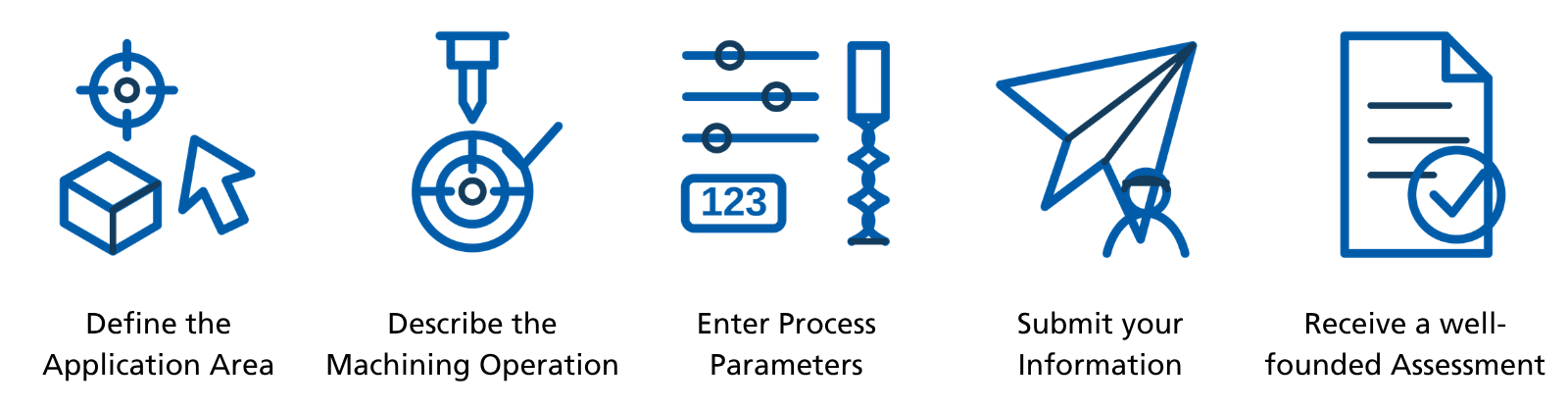
The SPK Ceramic Fit Check evaluates your specific application from a technical perspective: material, machining operation, cutting conditions, and objectives. You will receive a well-founded initial assessment of whether ceramic cutting materials make sense for your process.
- Potential Assessment: Is ceramic basically an interesting option for your application?
- Cutting Material Direction: Which ceramic family or alternative is technically feasible?
- Machining Process: What stability, cutting, or engagement conditions need to be considered?
- Next Evaluation Step: Cutting data, tool selection, test proposal, or contact with application engineering.
Start Your Ceramic Fit Check
When is the Fit Check worthwhile?
- Carbide runs stable, but too slowly. When machining reaches its thermal and economic limits, ceramic cutting materials can enable a higher material removal rate.
- Tool life is inconsistent. The check helps narrow down the cause: cutting material, cutting edge, cutting data, engagement ratio, coolant, or stability.
- Dry machining is preferable. Many ceramic cutting materials are designed for high temperatures and allow the machining process to be run dry.
- CBN is not ideal technically or economically. In certain applications, ceramics can be a cost-effective alternative. In others, CBN remains the more robust choice.
- Series process needs more output. Particularly relevant when every second of cycle time or every tool change directly impacts piece costs.
- Unclear cutting material mix. Ceramics, carbide, or CBN? The Fit Check provides an application-specific initial direction.
SPK® by CeramTec – Ceramic Fit Check – FAQ
Is ceramics always better than carbide?
Ceramics is not a universal replacement. Ceramic cutting materials can offer significant advantages in suitable applications, but must be evaluated based on material, machining operation, cutting conditions, and process stability.
Which materials is cutting ceramics particularly suited for?
Typical fields of application are cast iron, heat-resistant superalloys such as Inconel, and hardened materials. Within these groups, the specific application determines the choice of cutting material.
Can ceramics be used in interrupted cutting?
Yes, modern ceramics are tougher and, depending on the type, highly impact-resistant. Certain ceramic grades, such as SiALON or silicon nitride, are excellently suited for heavily interrupted cuts.
Do I need to know exact cutting data already?
No. The Fit Check also works with rough information. However, the assessment becomes more reliable when current cutting data, tool life, machining objective, and process issues are provided.
What happens after submitting?
The information will be reviewed technically. You will then receive an initial assessment of whether ceramics is a suitable option, which cutting material direction may be applicable, and what the recommended next step would be.