Electroceramics for Electrical and Electromechanical Applications
Electroceramic materials combine the distinctive properties of technical ceramics with electrical, dielectric, and electromechanical functions. They are used in applications including sensors, actuators, transducers, as well as RF and high-voltage capacitors.
CeramTec develops and manufactures electroceramic solutions for demanding industrial applications – ranging from piezoelectric components to ceramic dielectrics and capacitors.

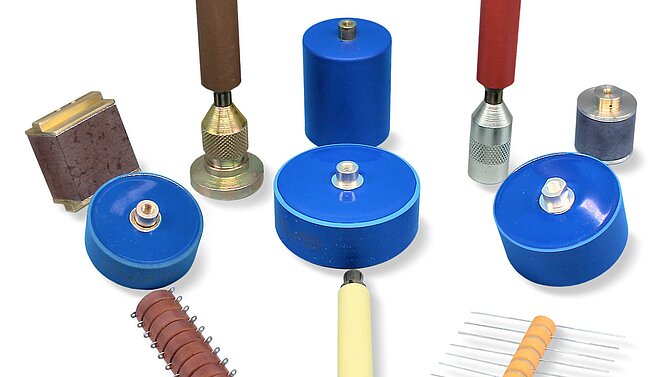
What Are Electroceramics?
Electroceramics are ceramic materials and components that are specifically used in electrical engineering and electronics due to their electrical, dielectric, piezoelectric, or electromechanical properties.
Depending on their composition, microstructure, and processing, ceramics can, for example, provide electrical insulation, store electrical energy, or convert mechanical energy into electrical energy and vice versa. This makes electroceramics suitable for applications requiring reliable performance, high precision, compact designs, or operation under demanding environmental conditions.
At CeramTec, two solution areas are of particular importance: piezoceramics for sensors, actuators, and transducers, as well as dielectric ceramics for RF and high-voltage capacitors.
| Technology | Function |
|---|---|
| Piezoceramics | Converts mechanical loads into electrical signals – and electrical energy into motion or vibration. |
| Dielectric Ceramics | Supports electrical insulation and energy storage in ceramic capacitors. |
Materials Expertise and Customized Solutions
Electroceramic components are defined not only by their shape, but above all by the properties of the material used. Composition, microstructure, electrical characteristics, temperature behaviour, geometry, and processing must be tailored to the specific application.
CeramTec supports customers in selecting suitable ceramic materials and developing application-specific components. From material selection and design through to manufacturing, technical requirements can be taken into account at an early stage.
Possible Service Elements
- Selection and development of suitable ceramic materials
- Design and engineering of component geometries
- Adaptation to electrical, mechanical, and thermal requirements
- Development of customized components
- Support from the early development stage onward
- Production of both small and large quantities, depending on the product area


Applications & Industries
Electroceramic materials are used wherever electrical functions need to be combined with high precision, reliability, or durability.
- Sensors and measurement technology: Piezoceramic sensors can be used to measure forces, pressure, acceleration, flow, or fill levels, for example.
- Actuators and transducers: Piezoceramic actuators and transducers convert electrical signals into motion, vibration, or ultrasound.
- High-frequency technology: RF capacitors support applications in which high frequencies and defined electrical properties are critical.
- High-voltage technology: High-voltage capacitors enable electrical energy storage and insulation in demanding voltage ranges.
- Automotive and mobility: Piezoceramic sensors and other ceramic components support functions in vehicles and mobile systems.
- Medical and industrial applications: Piezoceramic solutions are used, among other things, in medical devices and industrial measurement and manufacturing systems.